Deep in the heart of Central Java, where the tropical sun casts long shadows over lush green landscapes, two ancient marvels stand as silent witnesses to a civilization long gone yet profoundly influential. Borobudur and Prambanan, separated by mere miles yet worlds apart in spiritual significance, represent the pinnacle of human achievement in art, architecture, and religious devotion. These UNESCO World Heritage sites, often overshadowed by their Cambodian and Indian counterparts, hold secrets and stories that continue to captivate archaeologists, historians, and spiritual seekers alike.
The journey to these ancient sites begins with an understanding of their historical context. Between the 8th and 10th centuries, Central Java witnessed an extraordinary flourishing of temple construction under the Sailendra and Sanjaya dynasties. Borobudur emerged as the world's largest Buddhist temple, while Prambanan stood as a magnificent Hindu complex, reflecting the remarkable religious coexistence that characterized ancient Javanese society. This period of temple building represents one of Southeast Asia's most significant architectural and spiritual golden ages.
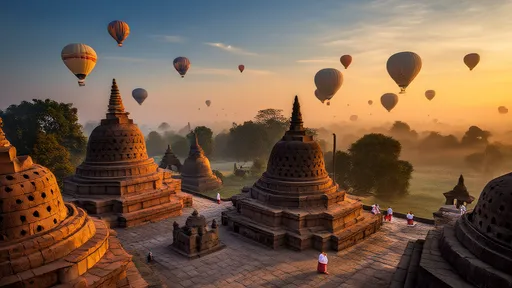
Approaching Borobudur at dawn, one cannot help but feel a sense of awe at this massive stone mandala rising from the morning mist. The world's largest Buddhist monument appears as a stepped pyramid, its nine stacked platforms leading pilgrims upward toward enlightenment. The structure's design embodies the Buddhist cosmology, with the base representing the world of desire, the middle terraces symbolizing the world of forms, and the circular platforms atop signifying the formless world. Each level brings visitors closer to nirvana, both physically and spiritually.
The sheer scale of Borobudur's narrative artistry overwhelms the senses. More than 2,600 relief panels and 504 Buddha statues adorn the monument, creating what many scholars consider the world's most extensive and complete ensemble of Buddhist reliefs. These carvings depict not only the life of Gautama Buddha but also scenes from daily life in 8th-century Java, providing an invaluable window into ancient Indonesian society. The attention to detail in these panels—the expressions on faces, the flow of garments, the naturalistic rendering of animals and plants—reveals the extraordinary skill of the artisans who created them.
Perhaps most magical is the experience of watching sunrise from Borobudur's upper terraces. As the first golden light illuminates the surrounding volcanoes and rice fields, the stone Buddhas seated within their perforated stupas seem to come alive. The morning mist creates an ethereal atmosphere, while the distant call to prayer from nearby mosques serves as a reminder of Java's layered religious history. This daily transformation from darkness to light mirrors the spiritual journey that Borobudur represents.
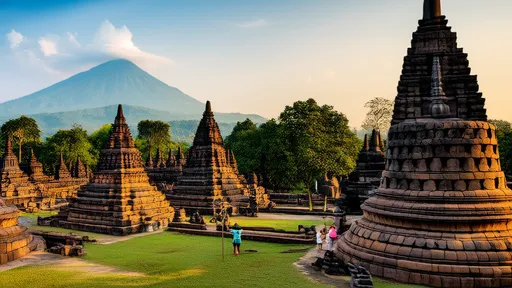
Twenty kilometers northeast of Borobudur stands Prambanan, Borobudur's Hindu counterpart and Indonesia's largest temple complex dedicated to Shiva. Where Borobudur impresses with its massive horizontal expanse, Prambanan astonishes with its vertical aspiration. The main temples soar dramatically toward the sky, their sharply pointed spires (meru) representing the mythical Mount Meru, home of the gods in Hindu cosmology. This architectural contrast between the Buddhist monument's horizontal journey and the Hindu complex's vertical reach speaks volumes about the different spiritual paths they represent.
The Prambanan complex consists of 240 stone temples, though many lie in ruins following centuries of earthquakes and volcanic activity. The eight main temples stand in three concentric squares, with the three primary shrines dedicated to the Trimurti: Shiva the Destroyer, Vishnu the Preserver, and Brahma the Creator. The largest central temple, dedicated to Shiva, rises 47 meters high and contains magnificent statues of the deity and his consort Durga. The temple's exterior features intricate carvings depicting scenes from the Ramayana epic, their narrative quality rivaling the Buddhist stories told at Borobudur.
What makes Prambanan particularly fascinating is its evidence of religious syncretism. While primarily Hindu, the complex shows clear Buddhist influences, and some scholars believe it may have served as a place of worship for both communities. This religious harmony stands as a powerful testament to Indonesia's long history of pluralism and cultural exchange. The nearby Sewu temple, a Buddhist complex literally meaning "thousand temples," further emphasizes this peaceful coexistence between faiths.
The rediscovery and restoration of both sites form compelling stories in themselves. Borobudur lay buried under volcanic ash and jungle growth for centuries until Sir Thomas Stamford Raffles, British ruler of Java during the Napoleonic Wars, initiated its uncovering in 1814. Subsequent restoration efforts, particularly a major UNESCO-led project from 1975 to 1982, returned the monument to its former glory. Prambanan suffered similar neglect and damage, with many of its temples collapsing in a major earthquake in the 16th century. Reconstruction efforts began in 1918 and continue to this day, making these sites living monuments to both ancient craftsmanship and modern archaeological science.
Visiting these temples today offers more than just historical insight; it provides a profound cultural experience. The Javanese people maintain deep spiritual connections to these sites, evident in the annual Waisak Buddhist ceremony at Borobudur and traditional Ramayana ballet performances against Prambanan's illuminated backdrop. These living traditions create a beautiful continuity between past and present, ancient stone and contemporary faith.
The preservation challenges facing these monuments remain significant. Volcanic activity, earthquakes, humidity, pollution, and increasing tourist numbers all threaten the delicate stonework. Conservation efforts must balance accessibility with protection, ensuring that future generations can experience the wonder of these ancient marvels. The sophisticated drainage systems at Borobudur and ongoing structural reinforcements at Prambanan demonstrate the constant vigilance required to maintain these treasures.
Beyond their architectural and religious significance, Borobudur and Prambanan stand as powerful symbols of Indonesia's cultural heritage. They represent a time when Java was a center of learning, art, and spiritual exploration, connected to trade networks that stretched from China to the Middle East. Their sophisticated artistry and engineering reflect a society capable of organizing enormous resources and talent toward spiritual expression.
For modern visitors, the journey to these temples becomes a pilgrimage in itself. The physical effort required to explore these vast complexes mirrors the spiritual journey they represent. Climbing Borobudur's steps or walking among Prambanan's towering shrines, one cannot help but feel connected to the countless pilgrims who have made similar journeys over twelve centuries. This connection across time forms perhaps the most magical aspect of visiting these ancient sites.
As the sun sets behind Mount Merapi, casting long shadows across the stone reliefs and statues, these monuments seem to whisper stories of kings and artisans, priests and pilgrims, gods and demons. They stand not as dead ruins but as living repositories of human aspiration, reminding us of our capacity for beauty, devotion, and transcendence. In a world increasingly focused on the future, Borobudur and Prambanan offer precious spaces for reflection on where we have been—and perhaps where we might still go.
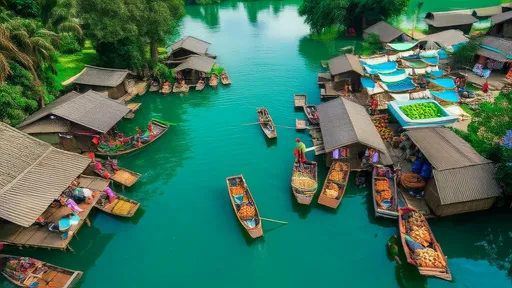
Beneath the vast Cambodian sky, where the horizon melts into liquid expanse, lies a world that defies terrestrial conventions. Tonlé Sap Lake, the beating heart of Southeast Asia's largest freshwater ecosystem, cradles a civilization not rooted in soil but floating upon water—a testament to human adaptability and resilience. Here, life unfolds not along streets but across liquid avenues, where homes bob gently with the rhythm of the monsoons and the very concept of terra firma becomes a distant memory.
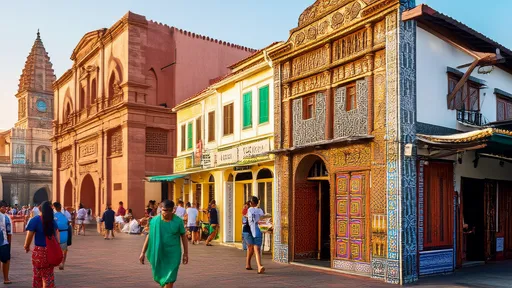
The Straits Settlements of Malaysia, with Malacca at its historic heart, present one of Southeast Asia's most intricate and enduring cultural tapestries. For centuries, this region has not merely been a crossroads of trade but a living laboratory of human connection, where languages, faiths, traditions, and bloodlines have mingled to create something entirely unique. The story of Malacca is, in many ways, the story of this fusion—a narrative written not in isolation but through a relentless and vibrant exchange with the wider world.
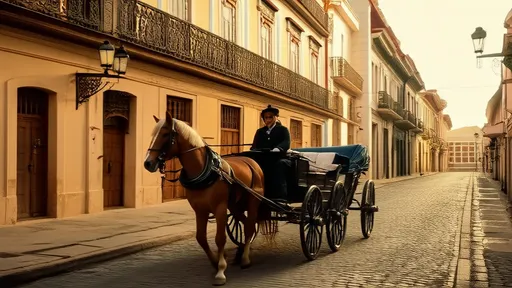
Nestled on the western coast of Luzon in the Philippines, the historic city of Vigan stands as a living testament to the country's rich colonial past. A UNESCO World Heritage Site since 1999, Vigan is renowned for its well-preserved Spanish-era architecture, cobblestone streets, and unique cultural fusion. Among the many ways to experience this enchanting city, perhaps none is more evocative than embarking on a journey through its heart in a traditional kalesa, or horse-drawn carriage. As you settle into the gently rocking seat, the rhythmic clip-clop of the horse's hooves against the ancient stones becomes the soundtrack to a voyage back in time, where the spirit of old Spain mingles with the vibrant soul of the Philippines.
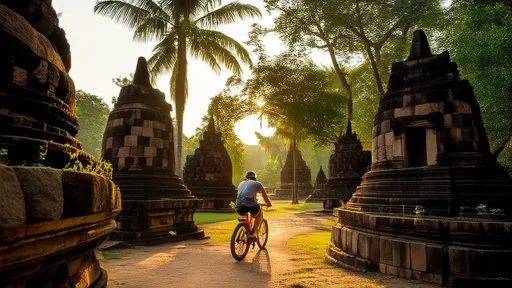
Nestled in the lower northern region of Thailand, the Sukhothai Historical Park stands as a profound testament to the dawn of Thai civilization. This UNESCO World Heritage Site, encompassing the ruins of the 13th-century capital of the Sukhothai Kingdom, offers more than a mere glimpse into the past; it provides a vast, immersive landscape best explored at the gentle, contemplative pace of a bicycle. To pedal through this ancient city is to embark on a journey through time, where the whispers of a glorious empire seem to echo from the laterite and stucco of its crumbling temples and palaces.
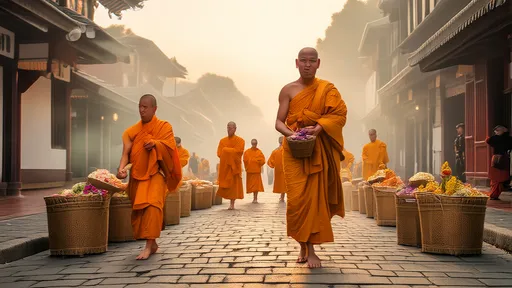
In the mist-shrouded dawn of Luang Prabang, a ritual unfolds with the quiet certainty of sunrise itself. For over a millennium, the ancient Buddhist tradition of Tak Bat, or almsgiving, has painted the saffron-splashed streets of this Laotian town with a scene of profound tranquility. This is not a performance for tourists, though many witness it; it is a living, breathing tapestry of faith, humility, and human connection that has defied the relentless march of time. The air, cool and heavy with the scent of frangipani and steaming sticky rice, seems to hold its breath, preserving a silence so deep it feels less like an absence of sound and more like a presence unto itself.
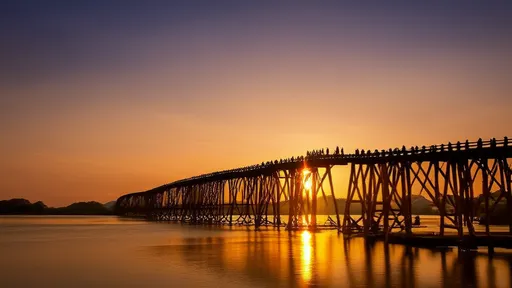
As dusk descends upon Mandalay, a profound stillness settles over U Bein Bridge, the world’s longest teak bridge stretching gracefully across the Taungthaman Lake. This is not merely a sunset; it is a slow, deliberate painting of the sky, a daily spectacle that draws travelers, monks, and locals alike to witness what many call the most beautiful sunset on Earth. The bridge, constructed in the mid-19th century using reclaimed teak from a former royal palace, stands as a testament to timeless craftsmanship and the enduring spirit of Myanmar. Its weathered pillars and planks, worn smooth by generations of footsteps, seem to absorb the day’s last light, glowing with a warmth that feels both ancient and immediate.
Deep in the heart of Central Java, where the tropical sun casts long shadows over lush green landscapes, two ancient marvels stand as silent witnesses to a civilization long gone yet profoundly influential. Borobudur and Prambanan, separated by mere miles yet worlds apart in spiritual significance, represent the pinnacle of human achievement in art, architecture, and religious devotion. These UNESCO World Heritage sites, often overshadowed by their Cambodian and Indian counterparts, hold secrets and stories that continue to captivate archaeologists, historians, and spiritual seekers alike.
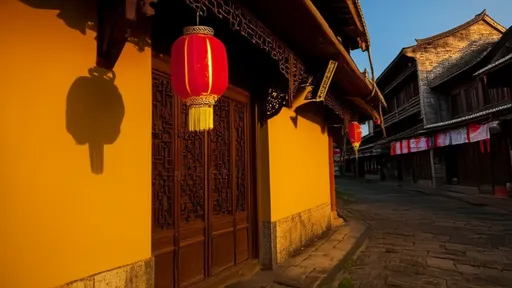
As dusk descends upon Hoi An, the ancient riverside town begins its daily metamorphosis. The ochre-walled houses, weathered wooden shutters, and moss-kissed rooftops that stood quietly beneath the tropical sun suddenly awaken beneath the glow of thousands of silk lanterns. These luminous orbs—crimson, saffron, emerald, and gold—dangle from eaves, sway above narrow alleyways, and float upon the Thu Bon River like fallen stars, casting a magical luminescence that feels both timeless and transient. This is when Hoi An truly breathes, when its centuries-old soul emerges from the shadows to tell its story.
There is a moment in Bagan when the world seems to hold its breath. It happens just before dawn, in that deep indigo silence that precedes the first hint of light. You stand on the weathered wooden platform of a high temple terrace, the ancient brick cool beneath your bare feet, and you wait. The air is still and carries the faint, dusty scent of centuries. Below you, the earth is not earth at all, but a vast, dark sea from which countless stone spires emerge like the petrified masts of a sunken fleet. This is the realm of the two thousand temples, a landscape so profoundly surreal it feels less like a place on a map and more like a dream from which you might never wake.
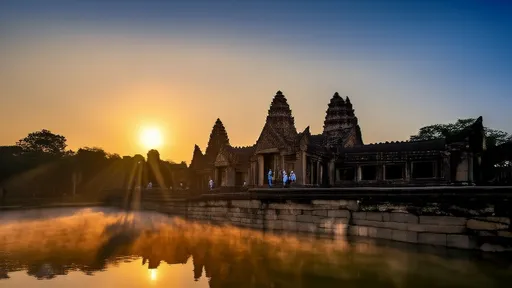
As the first hints of dawn bleed across the Cambodian sky, a profound silence blankets the ancient stones of Angkor Wat. This is not merely a sunrise; it is a daily resurrection, a moment where the boundary between the earthly and the divine grows thin. The sprawling temple complex, the largest religious monument ever constructed, begins as a stark, magnificent silhouette against the deepening hues of orange and violet. For the pilgrims and travelers who gather at the reflecting pool, their faces turned toward the east, the experience transcends tourism. It is a pilgrimage into the very heart of the Khmer soul, etched in sandstone and devotion.
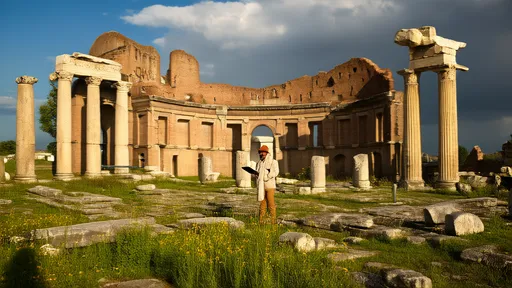
There is a certain magic to tracing the footsteps of giants through history, and few figures cast a longer shadow across Europe than Gaius Julius Caesar. His Commentarii de Bello Gallico—the Commentaries on the Gallic War—is more than a military log; it is an invitation, a two-thousand-year-old travelogue beckoning us to explore the lands he once sought to conquer. To follow Caesar into France is to embark on a journey through time, where the line between the ancient text and the modern landscape beautifully blurs, revealing a nation whose deep roots are inextricably tied to Rome’s most famous general.
Nestled in the heart of Siberia, Lake Baikal presents a winter spectacle unlike any other on Earth. As the deepest and oldest freshwater lake in the world, it transforms into a crystalline dreamscape each year, where the magic of blue ice and trapped methane bubbles creates an ethereal experience that blurs the line between reality and fantasy. This destination, where European influences meet untamed Asian wilderness, offers intrepid travelers a journey into a frozen realm that feels both otherworldly and profoundly grounding.
The morning air on the Greek island of Naxos carries a crisp, salty tang, a prelude to the day’s labor on the sea. Before the first light cracks the horizon, the small harbor is already stirring. Dim lanterns sway on the prows of weathered wooden kaikia—the traditional fishing boats—casting dancing reflections on the dark water. This is not a spectacle for tourists; it is the unvarnished start of a working day, a rhythm that has defined these islands for millennia. I am here not as an observer, but to join Yiannis, a local fisherman whose family has hauled nets from these waters for three generations.
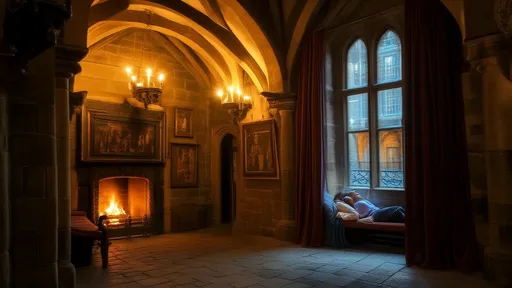
There is a certain magic that lingers in the air of Ghent, a city where the past is not merely remembered but palpably alive in its cobbled streets and soaring spires. Yet, for the traveler seeking an experience that transcends the typical tourist itinerary, there exists an opportunity to not just visit history, but to slumber within its very walls. Imagine, if you will, retiring for the evening not to a standard hotel room, but to a chamber within a genuine medieval castle, where the stones whisper tales of knights, nobility, and bygone eras. This is not a fantasy; it is the unique offering of several meticulously preserved fortresses in and around the Flemish city of Ghent, allowing guests a night of unparalleled historical immersion.
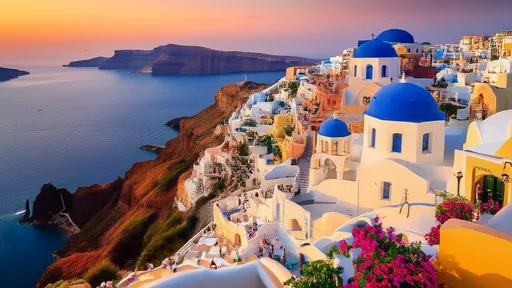
There is a reason why sunsets in Oia, Santorini are whispered about in reverent tones across the globe. It is not merely a daily celestial event; it is a phenomenon, a cultural touchstone, and for many, a pilgrimage. The promise of witnessing what is often hailed as the world's most beautiful sunset draws countless souls to the whitewashed crescent of the village, perched precariously on the northern tip of the caldera. To book your place for this spectacle is to secure a front-row seat to one of nature's most breathtaking performances.
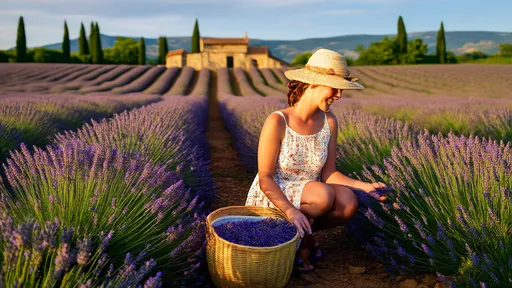
There is a scent that defines summer in Provence, a fragrance so potent and pure it seems to weave itself into the very fabric of the air, the earth, and the memory. It is the smell of lavender, and to experience it from a bottle or a sachet is one thing, but to witness its source—to walk into those endless, vibrating rows of purple under the Midi sun—is to understand a fundamental truth about beauty and labor. This is not a passive observation; it is an immersion. To travel to Provence in high summer with the intent to not just see, but to harvest, is to engage in a ritual as old as the hills themselves, a personal communion with a landscape that has intoxicating the senses for centuries.
Nestled in the heart of Iceland's otherworldly volcanic landscape lies the Blue Lagoon, a geothermal spa that seems almost too surreal to be real. Its milky-blue waters, rich in minerals like silica and sulfur, steam against the stark black lava fields that surround it, creating a scene straight out of a fantasy novel. For decades, travelers from across the globe have journeyed to this remote corner of the world not just to witness its beauty, but to immerse themselves in its warm, mineral-rich embrace. The lagoon is more than a tourist attraction; it's a sanctuary where nature’s raw power meets human rejuvenation.
There is something uniquely magical about attending a genuine Mozart concert in Salzburg, the city where the maestro himself was born and where his musical legacy feels as alive today as it was in the 18th century. Nestled amidst the baroque architecture and the serene flow of the Salzach River, the experience transcends mere performance; it becomes a pilgrimage for classical music lovers and a profound connection to history. The very air in Salzburg seems to hum with the echoes of Mozart’s compositions, and to sit in one of its historic halls, listening to his work played by masterful musicians, is to step into a living, breathing monument to genius.
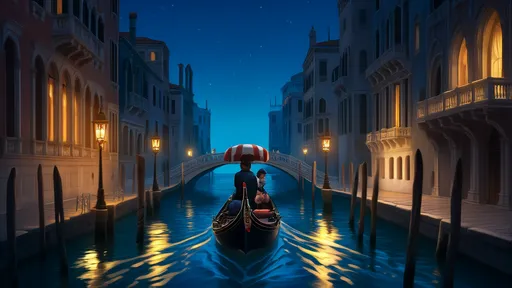
There is a certain magic that descends upon Venice as the sun dips below the horizon, a transformation that turns the city’s famous canals from bustling waterways into ribbons of dark, reflective silk. The daytime chatter of tourists fades, replaced by the gentle lapping of water against ancient stone and the distant, melancholic notes of an accordion. It is in this hushed, twilight hour that the true soul of Venice reveals itself, and there is no better way to commune with it than from the polished wooden seat of a gondola.
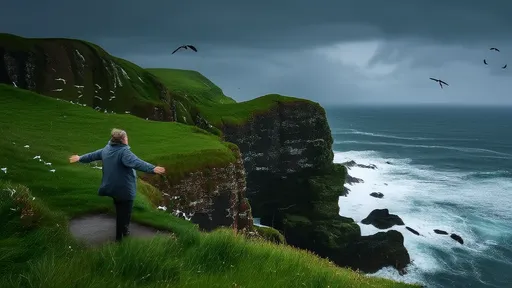
Standing at the edge of the Cliffs of Moher, one is immediately humbled by the sheer force of nature. The Atlantic wind does not merely blow here; it roars, it howls, it screams with a primordial fury that feels both ancient and utterly immediate. It is not an element to be observed from a distance but a physical presence that demands to be felt, a relentless force that sculpts the very landscape and etches its power onto the soul of every visitor. This is not a gentle breeze off the ocean; this is the raw, untamed breath of the Atlantic itself, a constant reminder of the wild, unforgiving power that defines Ireland’s western frontier.