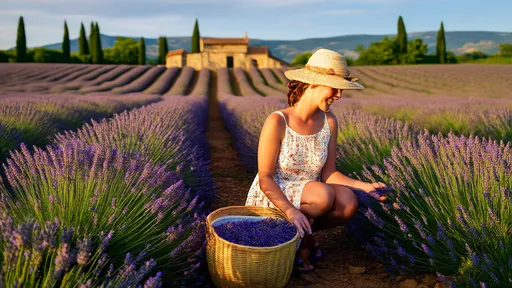
There is a scent that defines summer in Provence, a fragrance so potent and pure it seems to weave itself into the very fabric of the air, the earth, and the memory. It is the smell of lavender, and to experience it from a bottle or a sachet is one thing, but to witness its source—to walk into those endless, vibrating rows of purple under the Midi sun—is to understand a fundamental truth about beauty and labor. This is not a passive observation; it is an immersion. To travel to Provence in high summer with the intent to not just see, but to harvest, is to engage in a ritual as old as the hills themselves, a personal communion with a landscape that has intoxicating the senses for centuries.
The journey begins long before the sickle is in hand. It starts with the drive through a region transformed. The Provençal landscape, often a palette of dusty greens and arid golds, is, for a few short weeks, electrified with color. From the Luberon to the Valensole Plateau, fields of lavender and its more camphorous cousin, lavandin, stretch to the horizon in neat, military rows, their intense purple hue a stunning contrast against the deep blue of the sky. The air itself changes, growing thick and sweet, each breath a heady cocktail of floral notes and the dry, herbal scent of the garrigue scrubland. Bees hum a constant, low-frequency soundtrack, busy at their work, reminding you that this explosion of color is not for our benefit alone, but is the very engine of local life.
Finding a farm that allows visitors to participate in the harvest requires a shift from a tourist mindset to one of a respectful guest. These are not amusement parks; they are working farms, often family-run for generations. The lavandiculteurs are proud people, their lives dictated by the sun and the soil. A quick internet search or a visit to a local tourist office can point you towards smaller, artisanal producers who welcome helping hands, often with prior arrangement. The reward is an authenticity no purchased tour can provide. You are not just passing through; you are, for a few hours, part of the rhythm of the place.
The work itself is deceptively simple, yet profoundly physical. The harvest, or la récolte, is timed with precision, typically from late June to mid-August, when the flowers are at their peak oil content. The best cutting is done in the morning, after the dew has evaporated but before the intense afternoon sun has baked the essential oils into the air. You are given a sickle—a short, curved blade that feels ancient and purposeful in your grip—and shown the technique: a smooth, pulling motion to gather a bunch of stems in one hand and slice them cleanly with the other. It is a rhythmic, almost meditative action. The first few bunches are awkward, but soon a rhythm develops. Your hands become sticky with sap, your skin carries the scent, and the sun beats down on your back.
This is where romance meets reality. The idyllic vision of strolling through purple fields is replaced by the genuine effort of labor. Your muscles ache, a line of sweat traces your spine, and the sheer scale of the field becomes apparent. Yet, this physicality is the key to the entire experience. It forges a connection. You develop a new respect for the stooped figures in the paintings of Van Gogh and Cézanne, who captured this very light, this very labor. Each bunch you lay carefully in your basket or on the sheet spread between the rows is not just a photograph; it is an accomplishment. The fragrance that rises from the disturbed plants is intensified, richer and more complex than the ambient smell, a direct reward for your effort.
Between rows, under the shade of a solitary tree, the farmer might share stories. They speak of their grandfathers who harvested with scythes, of the years when the frost came too late and damaged the buds, of the delicate balance of sun and rain required to produce the finest oil. They talk about the different varieties—the true lavender (Lavandula angustifolia) that grows at higher altitudes and produces the sweetest oil, and the hardier, more prolific lavandin that dominates the larger fields. This oral history, passed on with a glass of cool water, is as much a part of the harvest as the cutting itself. It roots the practice in time and place, connecting your morning's work to a continuum of seasons and generations.
After the cutting comes the bundling. The bunches are tied with string and hung upside down in a dark, well-ventilated barn or shed to dry. Walking into such a barn is an olfactory assault of the most wonderful kind. Thousands of hanging bouquets concentrate the scent into an almost visible cloud. Here, the lavender will cure for weeks, its precious oils sealing inside before it is distilled or stripped for sachets. Seeing the fruits of your labor—your own small pile of bundled lavender amidst the vastness of the harvest—brings a surprising sense of pride. You didn't just buy a product; you contributed, in a microscopic way, to its creation.
The memory of the harvest does not end when you leave the field. It follows you home. The scent, impossibly, has permeated your clothing, your hair, your skin. You will catch whiffs of it for days afterwards, a ghost of Provence clinging to you. The small bundle of lavender you are invariably gifted by the farmer becomes a treasured relic. Every time you crush a bud between your fingers months later, in the deep of winter, it will not merely release a pleasant smell. It will release a flood of sense-memory: the blinding sun, the weight of the sickle, the buzz of the bees, the ache in your shoulders, and the profound satisfaction of a day spent in honest work amidst impossible beauty.
Ultimately, to harvest lavender in Provence is to understand that the most beautiful things often require the greatest effort to truly know. The iconic image of the purple fields is a postcard. The scent from a boutique candle is a mimic. But the act of harvesting—the sweat, the tired muscles, the resin on your hands, and the stories shared between the rows—that is the true essence of the experience. It transforms the lavender from a sight to be seen into a moment to be lived, a tangible thread connecting you to the land, its history, and the timeless rhythm of a Provençal summer. It is the difference between smelling perfume and understanding the flower.
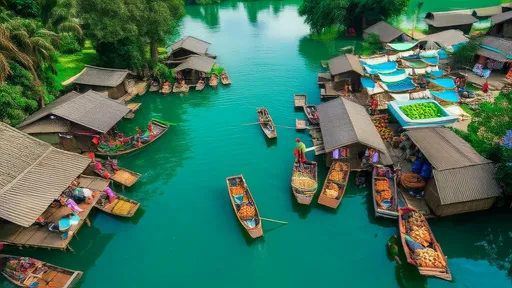
Beneath the vast Cambodian sky, where the horizon melts into liquid expanse, lies a world that defies terrestrial conventions. Tonlé Sap Lake, the beating heart of Southeast Asia's largest freshwater ecosystem, cradles a civilization not rooted in soil but floating upon water—a testament to human adaptability and resilience. Here, life unfolds not along streets but across liquid avenues, where homes bob gently with the rhythm of the monsoons and the very concept of terra firma becomes a distant memory.
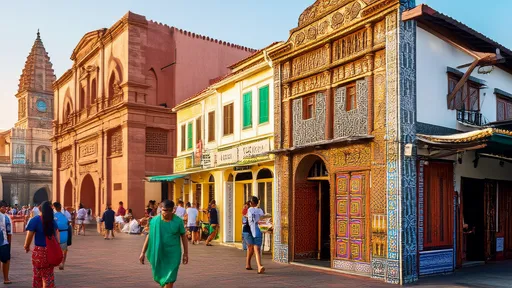
The Straits Settlements of Malaysia, with Malacca at its historic heart, present one of Southeast Asia's most intricate and enduring cultural tapestries. For centuries, this region has not merely been a crossroads of trade but a living laboratory of human connection, where languages, faiths, traditions, and bloodlines have mingled to create something entirely unique. The story of Malacca is, in many ways, the story of this fusion—a narrative written not in isolation but through a relentless and vibrant exchange with the wider world.
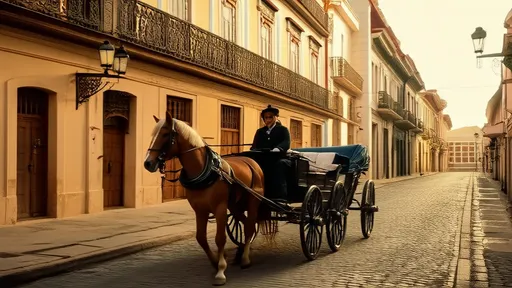
Nestled on the western coast of Luzon in the Philippines, the historic city of Vigan stands as a living testament to the country's rich colonial past. A UNESCO World Heritage Site since 1999, Vigan is renowned for its well-preserved Spanish-era architecture, cobblestone streets, and unique cultural fusion. Among the many ways to experience this enchanting city, perhaps none is more evocative than embarking on a journey through its heart in a traditional kalesa, or horse-drawn carriage. As you settle into the gently rocking seat, the rhythmic clip-clop of the horse's hooves against the ancient stones becomes the soundtrack to a voyage back in time, where the spirit of old Spain mingles with the vibrant soul of the Philippines.
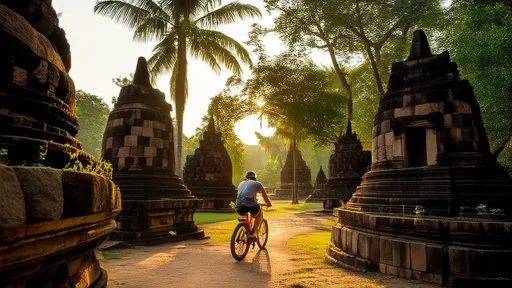
Nestled in the lower northern region of Thailand, the Sukhothai Historical Park stands as a profound testament to the dawn of Thai civilization. This UNESCO World Heritage Site, encompassing the ruins of the 13th-century capital of the Sukhothai Kingdom, offers more than a mere glimpse into the past; it provides a vast, immersive landscape best explored at the gentle, contemplative pace of a bicycle. To pedal through this ancient city is to embark on a journey through time, where the whispers of a glorious empire seem to echo from the laterite and stucco of its crumbling temples and palaces.
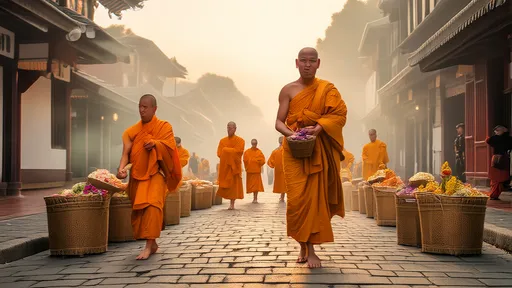
In the mist-shrouded dawn of Luang Prabang, a ritual unfolds with the quiet certainty of sunrise itself. For over a millennium, the ancient Buddhist tradition of Tak Bat, or almsgiving, has painted the saffron-splashed streets of this Laotian town with a scene of profound tranquility. This is not a performance for tourists, though many witness it; it is a living, breathing tapestry of faith, humility, and human connection that has defied the relentless march of time. The air, cool and heavy with the scent of frangipani and steaming sticky rice, seems to hold its breath, preserving a silence so deep it feels less like an absence of sound and more like a presence unto itself.
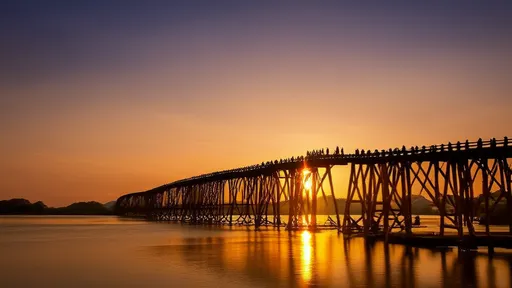
As dusk descends upon Mandalay, a profound stillness settles over U Bein Bridge, the world’s longest teak bridge stretching gracefully across the Taungthaman Lake. This is not merely a sunset; it is a slow, deliberate painting of the sky, a daily spectacle that draws travelers, monks, and locals alike to witness what many call the most beautiful sunset on Earth. The bridge, constructed in the mid-19th century using reclaimed teak from a former royal palace, stands as a testament to timeless craftsmanship and the enduring spirit of Myanmar. Its weathered pillars and planks, worn smooth by generations of footsteps, seem to absorb the day’s last light, glowing with a warmth that feels both ancient and immediate.
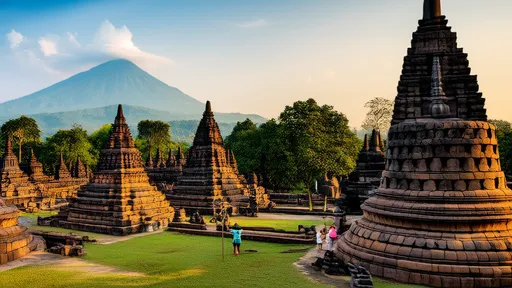
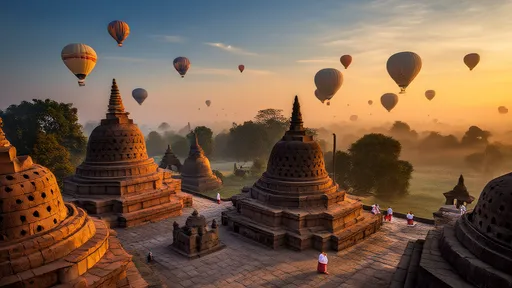
Deep in the heart of Central Java, where the tropical sun casts long shadows over lush green landscapes, two ancient marvels stand as silent witnesses to a civilization long gone yet profoundly influential. Borobudur and Prambanan, separated by mere miles yet worlds apart in spiritual significance, represent the pinnacle of human achievement in art, architecture, and religious devotion. These UNESCO World Heritage sites, often overshadowed by their Cambodian and Indian counterparts, hold secrets and stories that continue to captivate archaeologists, historians, and spiritual seekers alike.
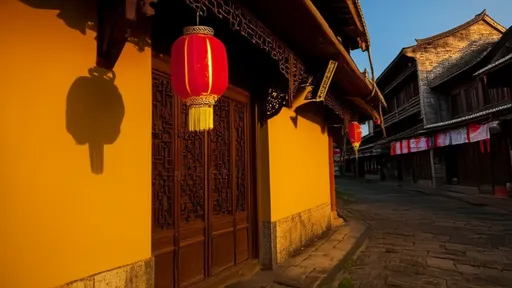
As dusk descends upon Hoi An, the ancient riverside town begins its daily metamorphosis. The ochre-walled houses, weathered wooden shutters, and moss-kissed rooftops that stood quietly beneath the tropical sun suddenly awaken beneath the glow of thousands of silk lanterns. These luminous orbs—crimson, saffron, emerald, and gold—dangle from eaves, sway above narrow alleyways, and float upon the Thu Bon River like fallen stars, casting a magical luminescence that feels both timeless and transient. This is when Hoi An truly breathes, when its centuries-old soul emerges from the shadows to tell its story.
There is a moment in Bagan when the world seems to hold its breath. It happens just before dawn, in that deep indigo silence that precedes the first hint of light. You stand on the weathered wooden platform of a high temple terrace, the ancient brick cool beneath your bare feet, and you wait. The air is still and carries the faint, dusty scent of centuries. Below you, the earth is not earth at all, but a vast, dark sea from which countless stone spires emerge like the petrified masts of a sunken fleet. This is the realm of the two thousand temples, a landscape so profoundly surreal it feels less like a place on a map and more like a dream from which you might never wake.
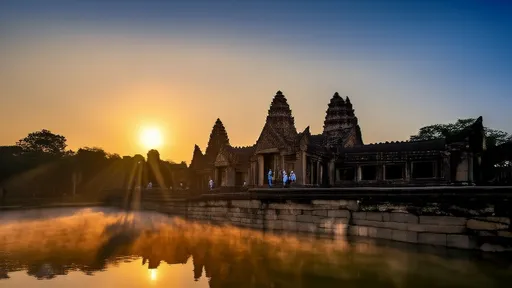
As the first hints of dawn bleed across the Cambodian sky, a profound silence blankets the ancient stones of Angkor Wat. This is not merely a sunrise; it is a daily resurrection, a moment where the boundary between the earthly and the divine grows thin. The sprawling temple complex, the largest religious monument ever constructed, begins as a stark, magnificent silhouette against the deepening hues of orange and violet. For the pilgrims and travelers who gather at the reflecting pool, their faces turned toward the east, the experience transcends tourism. It is a pilgrimage into the very heart of the Khmer soul, etched in sandstone and devotion.
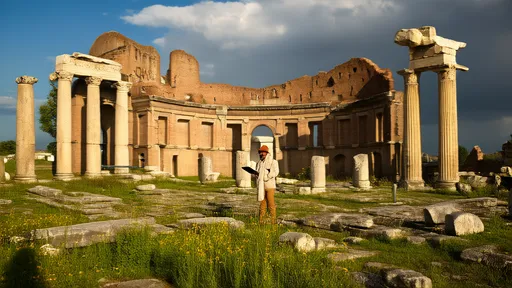
There is a certain magic to tracing the footsteps of giants through history, and few figures cast a longer shadow across Europe than Gaius Julius Caesar. His Commentarii de Bello Gallico—the Commentaries on the Gallic War—is more than a military log; it is an invitation, a two-thousand-year-old travelogue beckoning us to explore the lands he once sought to conquer. To follow Caesar into France is to embark on a journey through time, where the line between the ancient text and the modern landscape beautifully blurs, revealing a nation whose deep roots are inextricably tied to Rome’s most famous general.
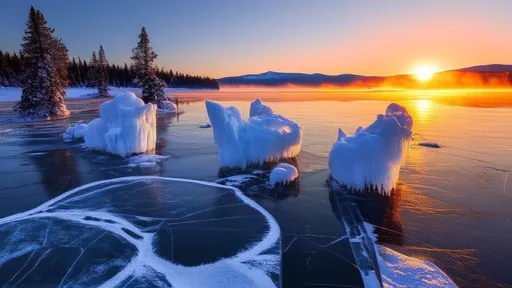
Nestled in the heart of Siberia, Lake Baikal presents a winter spectacle unlike any other on Earth. As the deepest and oldest freshwater lake in the world, it transforms into a crystalline dreamscape each year, where the magic of blue ice and trapped methane bubbles creates an ethereal experience that blurs the line between reality and fantasy. This destination, where European influences meet untamed Asian wilderness, offers intrepid travelers a journey into a frozen realm that feels both otherworldly and profoundly grounding.
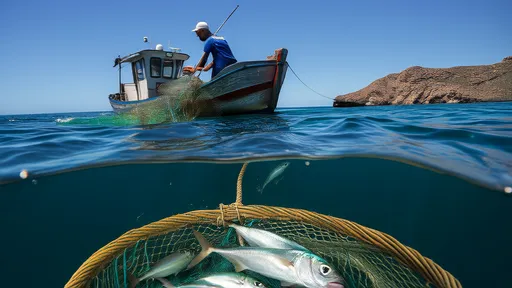
The morning air on the Greek island of Naxos carries a crisp, salty tang, a prelude to the day’s labor on the sea. Before the first light cracks the horizon, the small harbor is already stirring. Dim lanterns sway on the prows of weathered wooden kaikia—the traditional fishing boats—casting dancing reflections on the dark water. This is not a spectacle for tourists; it is the unvarnished start of a working day, a rhythm that has defined these islands for millennia. I am here not as an observer, but to join Yiannis, a local fisherman whose family has hauled nets from these waters for three generations.
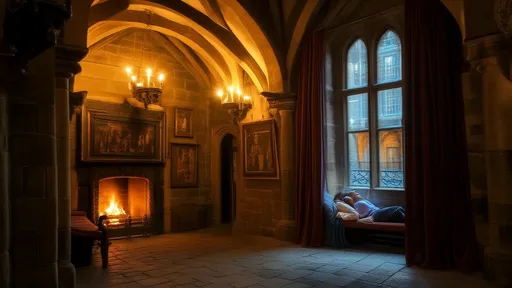
There is a certain magic that lingers in the air of Ghent, a city where the past is not merely remembered but palpably alive in its cobbled streets and soaring spires. Yet, for the traveler seeking an experience that transcends the typical tourist itinerary, there exists an opportunity to not just visit history, but to slumber within its very walls. Imagine, if you will, retiring for the evening not to a standard hotel room, but to a chamber within a genuine medieval castle, where the stones whisper tales of knights, nobility, and bygone eras. This is not a fantasy; it is the unique offering of several meticulously preserved fortresses in and around the Flemish city of Ghent, allowing guests a night of unparalleled historical immersion.
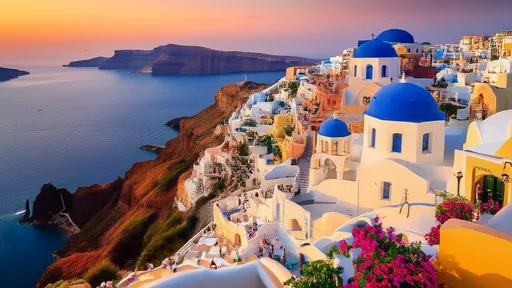
There is a reason why sunsets in Oia, Santorini are whispered about in reverent tones across the globe. It is not merely a daily celestial event; it is a phenomenon, a cultural touchstone, and for many, a pilgrimage. The promise of witnessing what is often hailed as the world's most beautiful sunset draws countless souls to the whitewashed crescent of the village, perched precariously on the northern tip of the caldera. To book your place for this spectacle is to secure a front-row seat to one of nature's most breathtaking performances.
There is a scent that defines summer in Provence, a fragrance so potent and pure it seems to weave itself into the very fabric of the air, the earth, and the memory. It is the smell of lavender, and to experience it from a bottle or a sachet is one thing, but to witness its source—to walk into those endless, vibrating rows of purple under the Midi sun—is to understand a fundamental truth about beauty and labor. This is not a passive observation; it is an immersion. To travel to Provence in high summer with the intent to not just see, but to harvest, is to engage in a ritual as old as the hills themselves, a personal communion with a landscape that has intoxicating the senses for centuries.
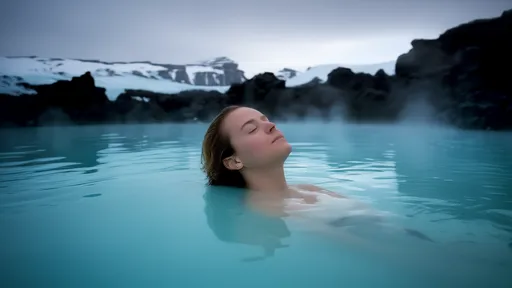
Nestled in the heart of Iceland's otherworldly volcanic landscape lies the Blue Lagoon, a geothermal spa that seems almost too surreal to be real. Its milky-blue waters, rich in minerals like silica and sulfur, steam against the stark black lava fields that surround it, creating a scene straight out of a fantasy novel. For decades, travelers from across the globe have journeyed to this remote corner of the world not just to witness its beauty, but to immerse themselves in its warm, mineral-rich embrace. The lagoon is more than a tourist attraction; it's a sanctuary where nature’s raw power meets human rejuvenation.
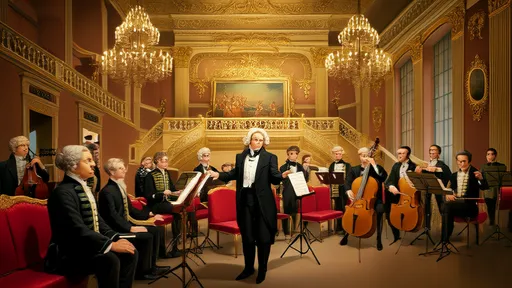
There is something uniquely magical about attending a genuine Mozart concert in Salzburg, the city where the maestro himself was born and where his musical legacy feels as alive today as it was in the 18th century. Nestled amidst the baroque architecture and the serene flow of the Salzach River, the experience transcends mere performance; it becomes a pilgrimage for classical music lovers and a profound connection to history. The very air in Salzburg seems to hum with the echoes of Mozart’s compositions, and to sit in one of its historic halls, listening to his work played by masterful musicians, is to step into a living, breathing monument to genius.
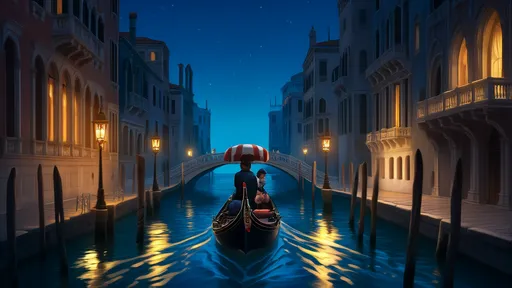
There is a certain magic that descends upon Venice as the sun dips below the horizon, a transformation that turns the city’s famous canals from bustling waterways into ribbons of dark, reflective silk. The daytime chatter of tourists fades, replaced by the gentle lapping of water against ancient stone and the distant, melancholic notes of an accordion. It is in this hushed, twilight hour that the true soul of Venice reveals itself, and there is no better way to commune with it than from the polished wooden seat of a gondola.
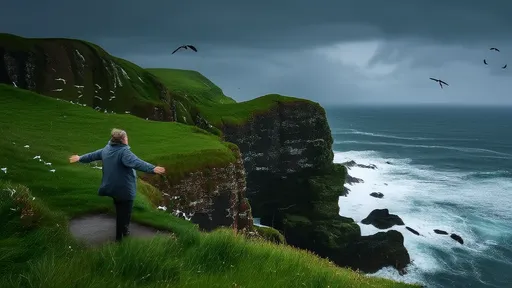
Standing at the edge of the Cliffs of Moher, one is immediately humbled by the sheer force of nature. The Atlantic wind does not merely blow here; it roars, it howls, it screams with a primordial fury that feels both ancient and utterly immediate. It is not an element to be observed from a distance but a physical presence that demands to be felt, a relentless force that sculpts the very landscape and etches its power onto the soul of every visitor. This is not a gentle breeze off the ocean; this is the raw, untamed breath of the Atlantic itself, a constant reminder of the wild, unforgiving power that defines Ireland’s western frontier.